Archaeological Sites
The earliest traces of human settlements date back to the Neolithic period, when pre-Nuragic architecture such as the Menhirs and Domus de Janas became widespread, while the Nuragic age saw the development of the Tombs of the Giants and the typical Stone Towers throughout the territory.The oldest evidence of the rich archaeological heritage of the Oristanese area is that of the Nuraghe Losa and the Nuragic complex of Santa Cristina, in the territory of Abbasanta and Paulilatino, respectively.
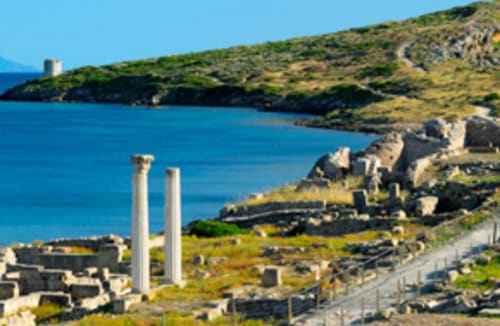
City of Tharros - Loc. San Giovanni di Sinis Cabras
The ruins of the Phoenician city of Tharros, on the Sinis Peninsula, date from the 9th-8th cent. B.C., of which two necropolis for incineration still remain. Conquered by the Carthaginians because of its strategic location, it received great political and urban impetus, as evidenced by the wealth of grave goods found. It was then the turn of the Romans, who built the city walls, the temple of Doric half-columns carved into the rock, the tetrastyle temple by the sea and two bath buildings, in one of which the early Christian baptistery was later implanted.
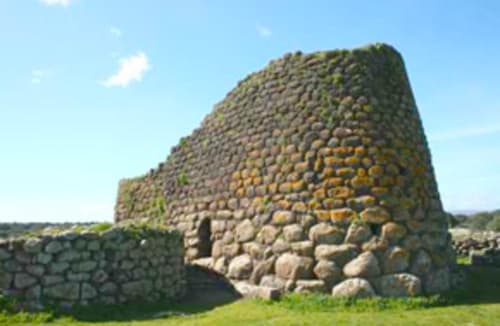
Nuraghe Losa - Abbasanta
The Nuraghe (14th-13th cent. BCE), not yet fully excavated, shows the typical "tholos" structure, unusually without an inner courtyard, joined to three towers by a section of wall.
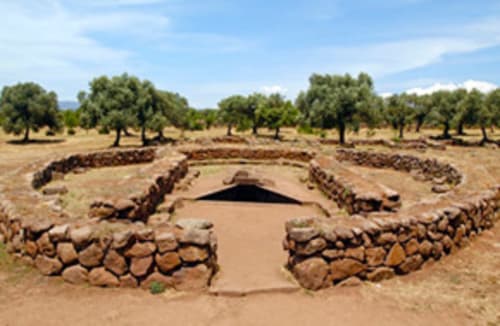
Nuragic Sanctuary of Santa Cristina - Paulilatino
The Santa Cristina nuragic complex, on the other hand, includes a nuragic village and a sacred well from the 11th century B.C. consisting of an atrium, trapezoidal stairs and a tholos chamber, making it one of the finest examples of Sardinian prehistoric architecture.
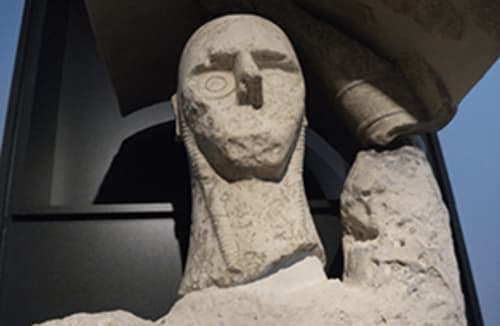
Giants of Mont'e Prama - Cabras
The Giants of Mont'e Prama are Nuragic sculptures, found broken into numerous fragments in 1974 in the locality of Mont'e Prama in the Sinis of Cabras. They are carved in local chalky sandstone and their height varies between 2 and 2.5 m. There are thirty-eight recomposed sculptures: five archers, four warriors, sixteen boxers, and thirteen nuraghe models.
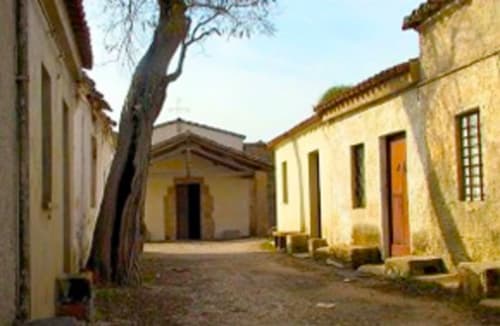
Hypogeum - Loc. San Salvatore Cabras
San Salvatore is the most interesting Sardinian religious village. In the 17th century the church of S.Salvatore was built on a pre-existing hypogeum sanctuary, where water has been worshipped for centuries. The building is accessed through an entrance that opens in the floor of the church and leads to a staircase carved into the rock. On the corridor are five rooms of Nuragic origin, carved into the rock, while in the apse wall there is a sacred well and several Punic, Arab, Greek as well as Roman inscriptions and paintings.
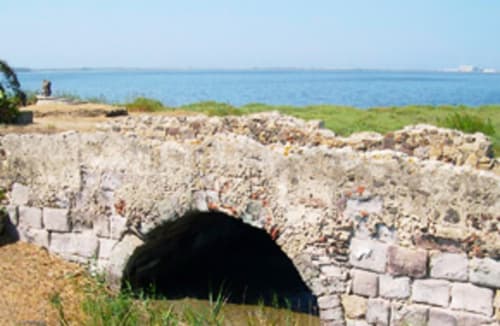
Othoca - Santa Giusta
Also of Phoenician origin is Othoca (8th cent. B.C.), the ancient Santa Giusta, of which a necropolis has come down to us; decayed in Punic times, the city experienced new development thanks to the Romans, who built roads and bridges, such as "su pontixeddu" over the rio Palmas, only to be abandoned in the Middle Ages.
City of Tharros - Loc. San Giovanni di Sinis Cabras
The ruins of the Phoenician city of Tharros, on the Sinis Peninsula, date from the 9th-8th cent. B.C., of which two necropolis for incineration still remain. Conquered by the Carthaginians because of its strategic location, it received great political and urban impetus, as evidenced by the wealth of grave goods found. It was then the turn of the Romans, who built the city walls, the temple of Doric half-columns carved into the rock, the tetrastyle temple by the sea and two bath buildings, in one of which the early Christian baptistery was later implanted.
Nuraghe Losa - Abbasanta
The Nuraghe (14th-13th cent. BCE), not yet fully excavated, shows the typical "tholos" structure, unusually without an inner courtyard, joined to three towers by a section of wall.
Nuragic Sanctuary of Santa Cristina - Paulilatino
The Santa Cristina nuragic complex, on the other hand, includes a nuragic village and a sacred well from the 11th century B.C. consisting of an atrium, trapezoidal stairs and a tholos chamber, making it one of the finest examples of Sardinian prehistoric architecture.
Giants of Mont'e Prama - Cabras
The Giants of Mont'e Prama are Nuragic sculptures, found broken into numerous fragments in 1974 in the locality of Mont'e Prama in the Sinis of Cabras. They are carved in local chalky sandstone and their height varies between 2 and 2.5 m. There are thirty-eight recomposed sculptures: five archers, four warriors, sixteen boxers, and thirteen nuraghe models.
Hypogeum - Loc. San Salvatore Cabras
San Salvatore is the most interesting Sardinian religious village. In the 17th century the church of S.Salvatore was built on a pre-existing hypogeum sanctuary, where water has been worshipped for centuries. The building is accessed through an entrance that opens in the floor of the church and leads to a staircase carved into the rock. On the corridor are five rooms of Nuragic origin, carved into the rock, while in the apse wall there is a sacred well and several Punic, Arab, Greek as well as Roman inscriptions and paintings.
Othoca - Santa Giusta
Also of Phoenician origin is Othoca (8th cent. B.C.), the ancient Santa Giusta, of which a necropolis has come down to us; decayed in Punic times, the city experienced new development thanks to the Romans, who built roads and bridges, such as "su pontixeddu" over the rio Palmas, only to be abandoned in the Middle Ages.
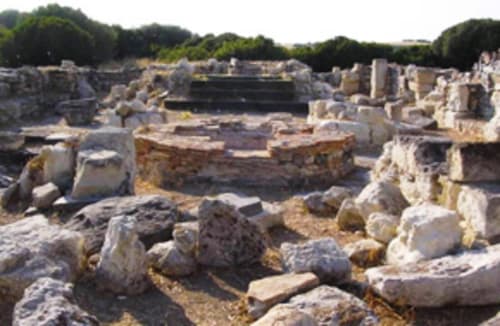
City of Cornus and Columbaris - Cornus Cuglieri
It has Punic roots, on the other hand, the town of Cornus in the territory of Cuglieri (6th cent. B.C.), where epic battles were fought between the Sardinians led by Ampsicora and his son Josto and the Roman conquerors. All that remains of Cornus are the acropolis, the city walls and the chamber tombs dug into the rock, while not far away are the ruins of Columbaris, a Peleo-Christian religious center with its necropolis and three basilicas, where sarcophagi and a baptismal font are still visible.
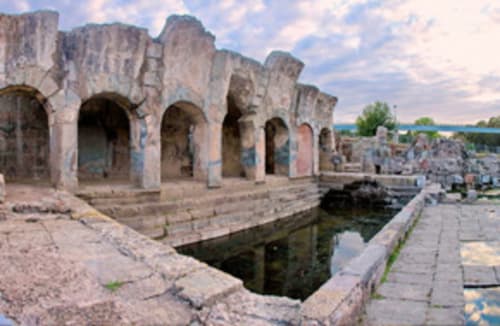
Spa - Fordongianus
From the Roman period are the baths of Fordongianus (ancient Forum Traiani, 1st cent. BCE), which exploited a naturally hot and curative spring: in addition to the calidarium, tiepidarium and frigidarium, the large pool with traces of mosaics and a small sacred area dedicated to nymphs remain.
Malaspina Castle - Bosa
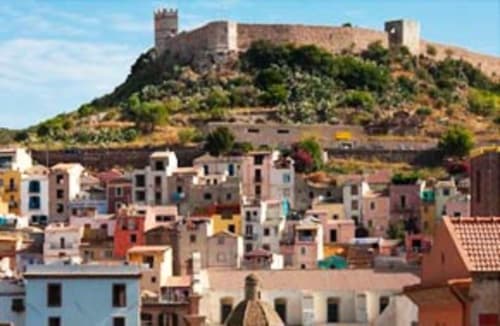
At 81 meters above sea level stands Serravalle Castle, commonly referred to as Malaspina Castle. The entire Serravalle Castle complex, measuring 2,000 sq. m. in size and built in 1112, occupies one hectare, within which lies the castle proper.
Archaeological Park - Suni
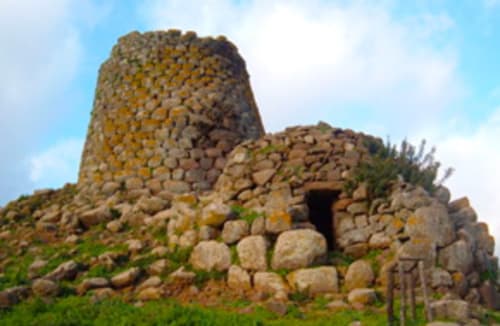
The Suni archaeological park, which includes the Nuraghe Nuraddeo, the domus da janas hypogeic necropolis "Chirisconis," the corridor nuraghe "Seneghe," and the Planargia ethno-anthropological museum "Tiu Virgilio."
Menhir - Laconi
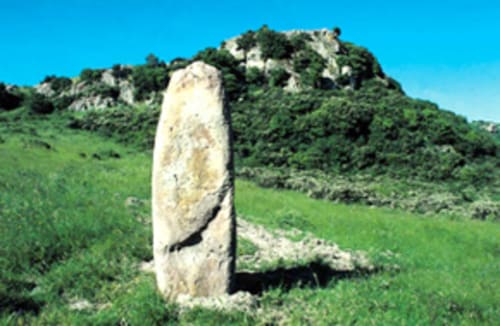
Laconi is important in terms of archaeology; in fact, the Menhir Statue Museum houses about forty monoliths carved from the local trachyte, found in the surrounding area and belonging to different types.
Nuraghi
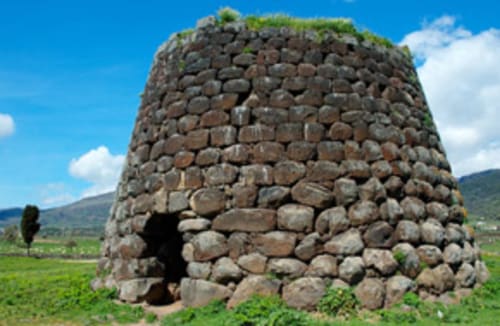
Nuraghes are a type of megalithic construction with a truncated cone shape found throughout the island. Unique in their kind and representative of the Nuragic civilization, they are considered to be distinctive of Sardinia. They are built with large more or less squared blocks of stone arranged one on top of the other; they can be formed by a single tower or by several towers. The most classic are those made up of a truncated cone-shaped tower. In the province of Oristano the nuraghes are present in the territory of the municipalities of: Abbasanta, Aidomaggiore, Albagiara, Bauladu, Ghilarza, Mogorella, Mogoro, Narbolia, Paulilatino, Santulussurgiu, San Vero Milis, Scano Montiferro, Sedilo, Seneghe, Siris, Soddi, Suni , Uras, Villanova Truschedu and Villa Verde.
City of Cornus and Columbaris - Cornus Cuglieri
It has Punic roots, on the other hand, the town of Cornus in the territory of Cuglieri (6th cent. B.C.), where epic battles were fought between the Sardinians led by Ampsicora and his son Josto and the Roman conquerors. All that remains of Cornus are the acropolis, the city walls and the chamber tombs dug into the rock, while not far away are the ruins of Columbaris, a Peleo-Christian religious center with its necropolis and three basilicas, where sarcophagi and a baptismal font are still visible.
Spa - Fordongianus
From the Roman period are the baths of Fordongianus (ancient Forum Traiani, 1st cent. BCE), which exploited a naturally hot and curative spring: in addition to the calidarium, tiepidarium and frigidarium, the large pool with traces of mosaics and a small sacred area dedicated to nymphs remain.
Malaspina Castle - Bosa
At 81 meters above sea level stands Serravalle Castle, commonly referred to as Malaspina Castle. The entire Serravalle Castle complex, measuring 2,000 sq. m. in size and built in 1112, occupies one hectare, within which lies the castle proper.
Archaeological Park - Suni
The Suni archaeological park, which includes the Nuraghe Nuraddeo, the domus da janas hypogeic necropolis "Chirisconis," the corridor nuraghe "Seneghe," and the Planargia ethno-anthropological museum "Tiu Virgilio."
Menhir - Laconi
Laconi is important in terms of archaeology; in fact, the Menhir Statue Museum houses about forty monoliths carved from the local trachyte, found in the surrounding area and belonging to different types.
Nuraghi
Nuraghes are a type of megalithic construction with a truncated cone shape found throughout the island. Unique in their kind and representative of the Nuragic civilization, they are considered to be distinctive of Sardinia. They are built with large more or less squared blocks of stone arranged one on top of the other; they can be formed by a single tower or by several towers. The most classic are those made up of a truncated cone-shaped tower. In the province of Oristano the nuraghes are present in the territory of the municipalities of: Abbasanta, Aidomaggiore, Albagiara, Bauladu, Ghilarza, Mogorella, Mogoro, Narbolia, Paulilatino, Santulussurgiu, San Vero Milis, Scano Montiferro, Sedilo, Seneghe, Siris, Soddi, Suni , Uras, Villanova Truschedu and Villa Verde.
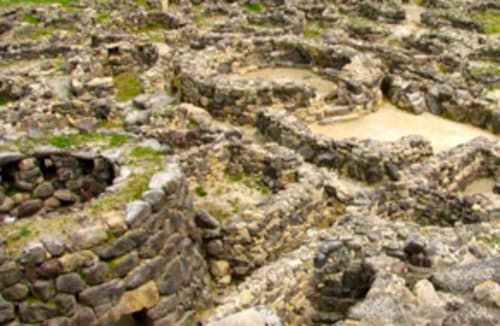
Nuragic Villages
Some nuraghi rise in isolation, while others are surrounded or connected to each other by a system of surrounding walls that enclose the remains of huts, so much so that they take on the appearance of a villageIn the province of Oristano there are in the territory of the municipalities of: Villa Verde, Genoni and Paulilatino.
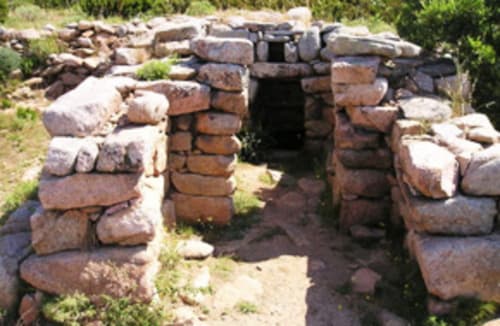
Sacred Wells
Sacred wells are Nuragic places intended for the worship of water that testify to the great importance given to water sources and the deeply religious spirit of the Sardinian people during the Nuragic Civilization. They are found numerous on the island and can be very different from each other. The most common type involves a circular well made with square blocks of stone, which can be accessed by steps from the surface to the water level. In the province of Oristano, sacred wells are present in the territory of the municipalities of: Cabras, Gonnosnò, Mogoro, Paulilatino, Villa Verde.
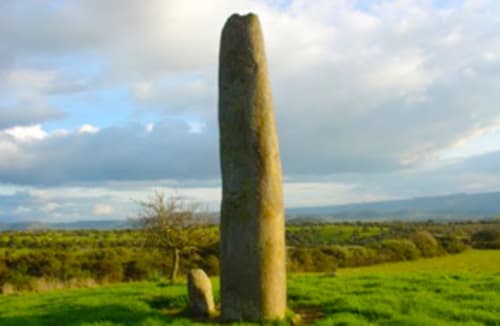
Menhir
Menhirs consist of large stones vertically dense in the ground, summarily hewn or carved and elongated in shape; they vary in size and can reach a height of about 5 m. Menhirs can be found as monoliths individually or as part of a group of similar stones. They have been erected in many different periods throughout prehistory. In the province of Oristano, menhirs are found in the territory of the municipalities of: Laconi, Paulilatino, Tresnuraghes and Villa Sant'Antoni.
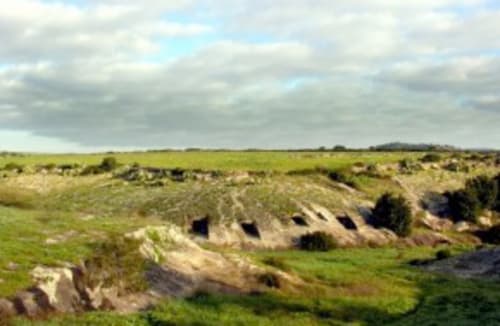
Domus de Janas
The domus de ianas are prehistoric burial structures consisting of tombs dug into the rock. They can be seen all over the territory of the island, either isolated or in large concentrations consisting of even more than 40 tombs, forming vast necropolises. Sometimes they present an antechamber overlooked by numerous small cells in which the deceased were laid to rest. Some tombs are decorated with carved reliefs or engravings. In the province of Oristano, domus de janas are present in the territory of the municipalities of: Abbasanta, Busacchi, Cabras, Gonnostramatza, Nughedu Santa Vittoria, Ruinas, Scano Montiferro, Sorradile, Suni and Villa Sant'Antonio.
Tombs of the Giants
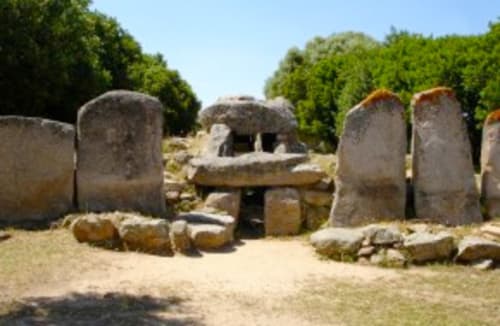
The tombs of the giants are funerary monuments consisting of collective burials belonging to the Nuragic age and present throughout Sardinia. They are constructions with a rectangular apsidal plan; they consist of a long burial chamber, built by means of large stone monoliths driven into the earth and covered by horizontally arranged slabs. The most peculiar element is certainly the facade. In the province of Oristano the tombs of the giants are present in the territory of the municipalities of: Abbasanta, Narbolia, Paulilatino,Sedilo, Seneghe and Tresnuraghes
Dolmen
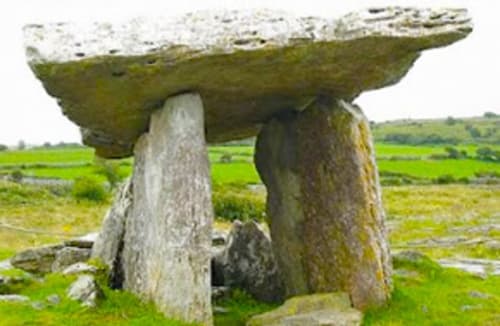
Dolmens are a type of prehistoric single-chamber megalithic tomb; they consist of two or more vertical stones driven into the earth supporting one or more horizontal slabs (flat band or lintel).In the province of Oristano, dolmens are found in the territory of the municipalities of: Laconi and Tresnuraghes.
Nuragic Villages
Some nuraghi rise in isolation, while others are surrounded or connected to each other by a system of surrounding walls that enclose the remains of huts, so much so that they take on the appearance of a villageIn the province of Oristano there are in the territory of the municipalities of: Villa Verde, Genoni and Paulilatino.
Sacred Wells
Sacred wells are Nuragic places intended for the worship of water that testify to the great importance given to water sources and the deeply religious spirit of the Sardinian people during the Nuragic Civilization. They are found numerous on the island and can be very different from each other. The most common type involves a circular well made with square blocks of stone, which can be accessed by steps from the surface to the water level. In the province of Oristano, sacred wells are present in the territory of the municipalities of: Cabras, Gonnosnò, Mogoro, Paulilatino, Villa Verde.
Menhir
Menhirs consist of large stones vertically dense in the ground, summarily hewn or carved and elongated in shape; they vary in size and can reach a height of about 5 m. Menhirs can be found as monoliths individually or as part of a group of similar stones. They have been erected in many different periods throughout prehistory. In the province of Oristano, menhirs are found in the territory of the municipalities of: Laconi, Paulilatino, Tresnuraghes and Villa Sant'Antoni.
Domus de Janas
The domus de ianas are prehistoric burial structures consisting of tombs dug into the rock. They can be seen all over the territory of the island, either isolated or in large concentrations consisting of even more than 40 tombs, forming vast necropolises. Sometimes they present an antechamber overlooked by numerous small cells in which the deceased were laid to rest. Some tombs are decorated with carved reliefs or engravings. In the province of Oristano, domus de janas are present in the territory of the municipalities of: Abbasanta, Busacchi, Cabras, Gonnostramatza, Nughedu Santa Vittoria, Ruinas, Scano Montiferro, Sorradile, Suni and Villa Sant'Antonio.
Tombs of the Giants
The tombs of the giants are funerary monuments consisting of collective burials belonging to the Nuragic age and present throughout Sardinia. They are constructions with a rectangular apsidal plan; they consist of a long burial chamber, built by means of large stone monoliths driven into the earth and covered by horizontally arranged slabs. The most peculiar element is certainly the facade. In the province of Oristano the tombs of the giants are present in the territory of the municipalities of: Abbasanta, Narbolia, Paulilatino,Sedilo, Seneghe and Tresnuraghes
Dolmen
Dolmens are a type of prehistoric single-chamber megalithic tomb; they consist of two or more vertical stones driven into the earth supporting one or more horizontal slabs (flat band or lintel).In the province of Oristano, dolmens are found in the territory of the municipalities of: Laconi and Tresnuraghes.
Talk about your hotel
Use this text to share information about your hotel with your guests. Describe your rooms, share special offers, or share your latest news.